From Imagination to Innovation: Bringing the Future into the Classroom
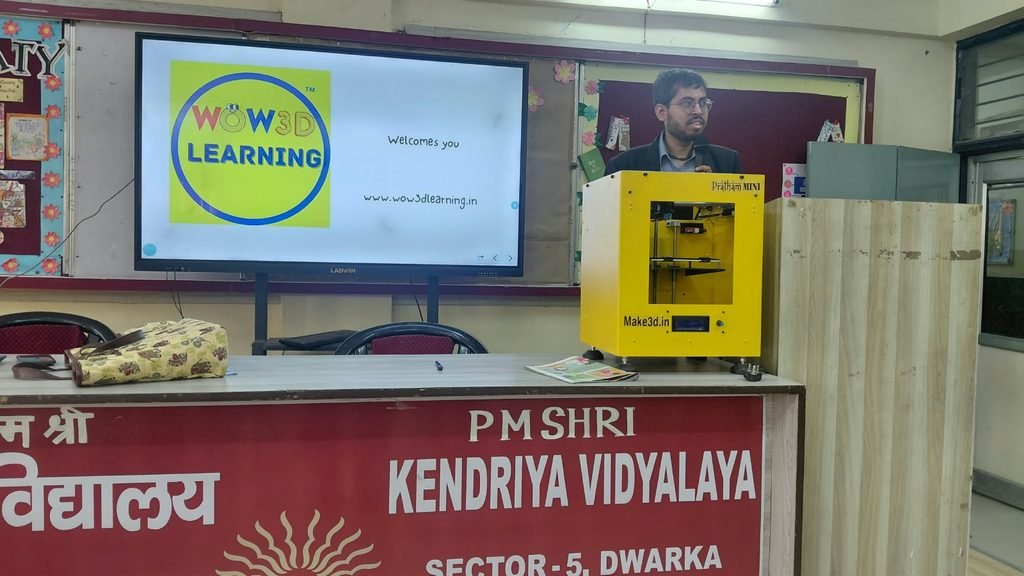
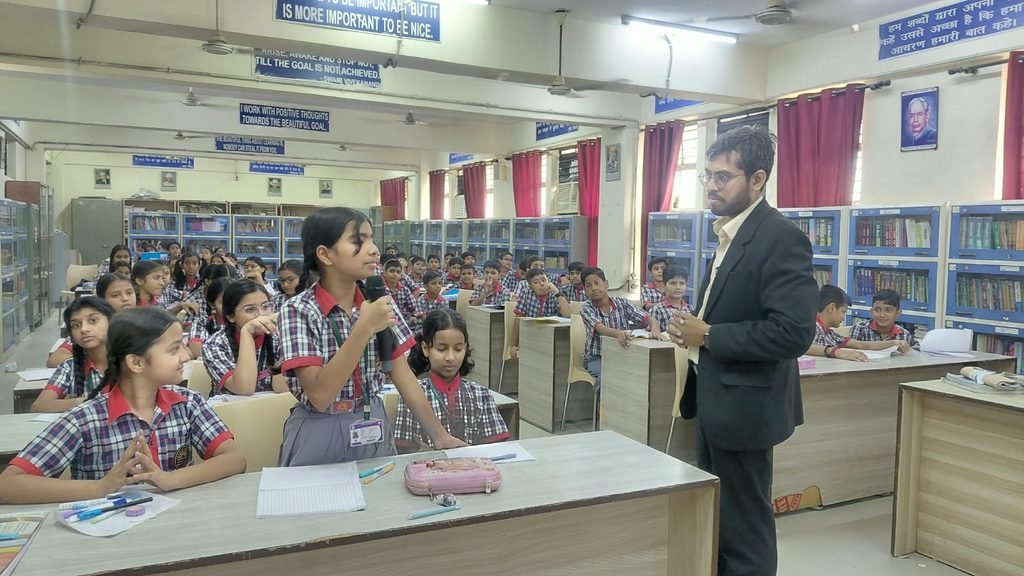
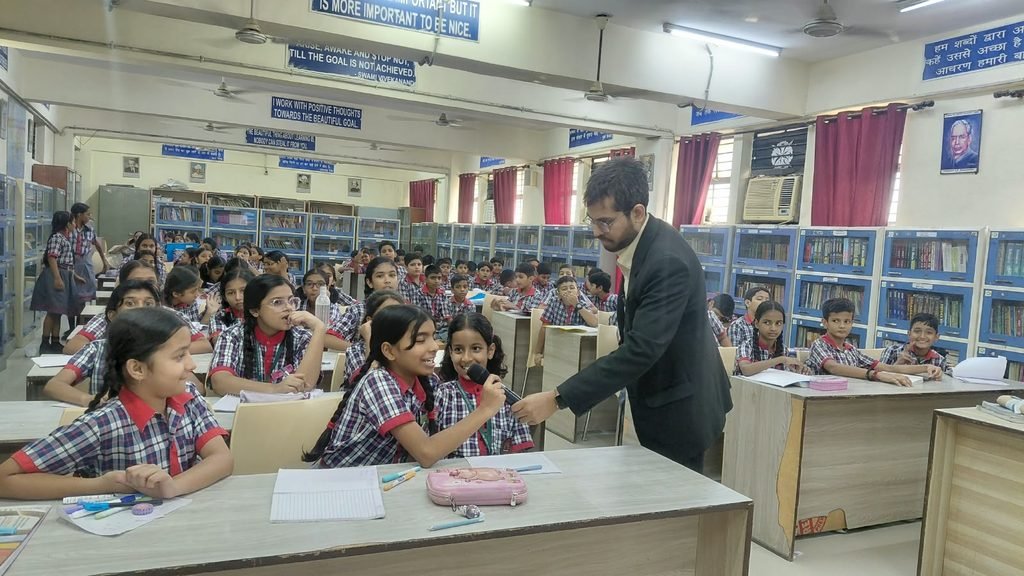
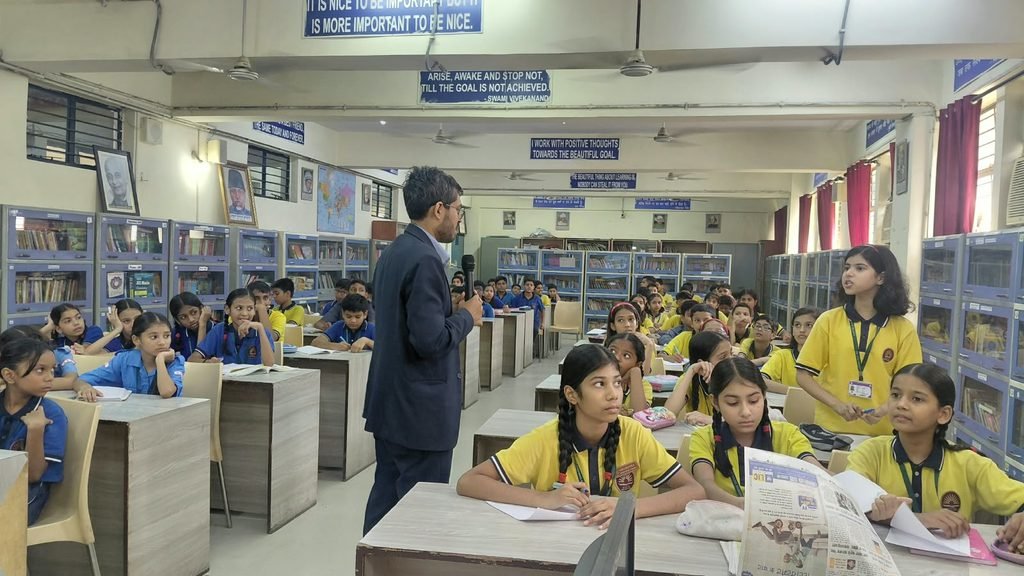
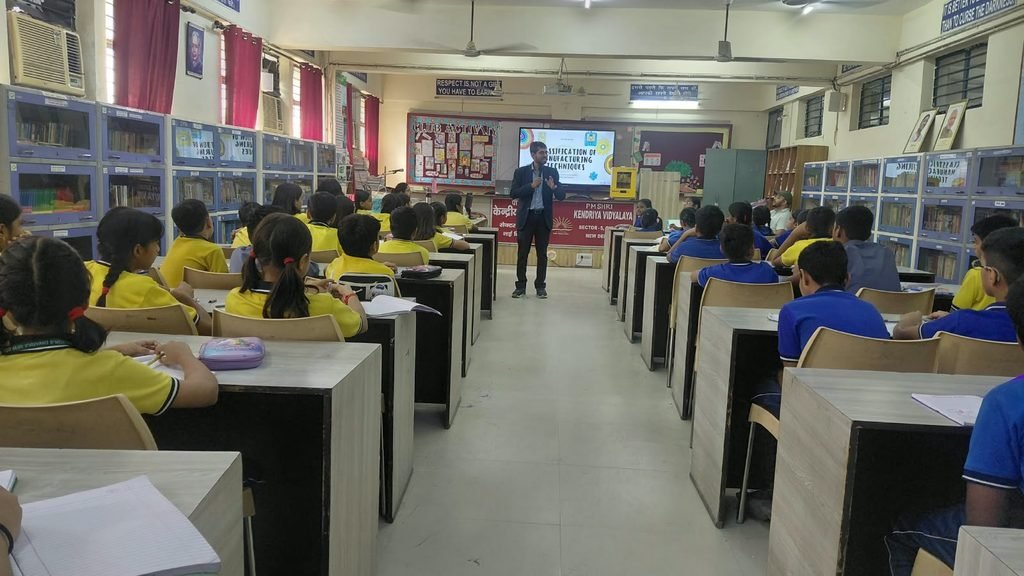
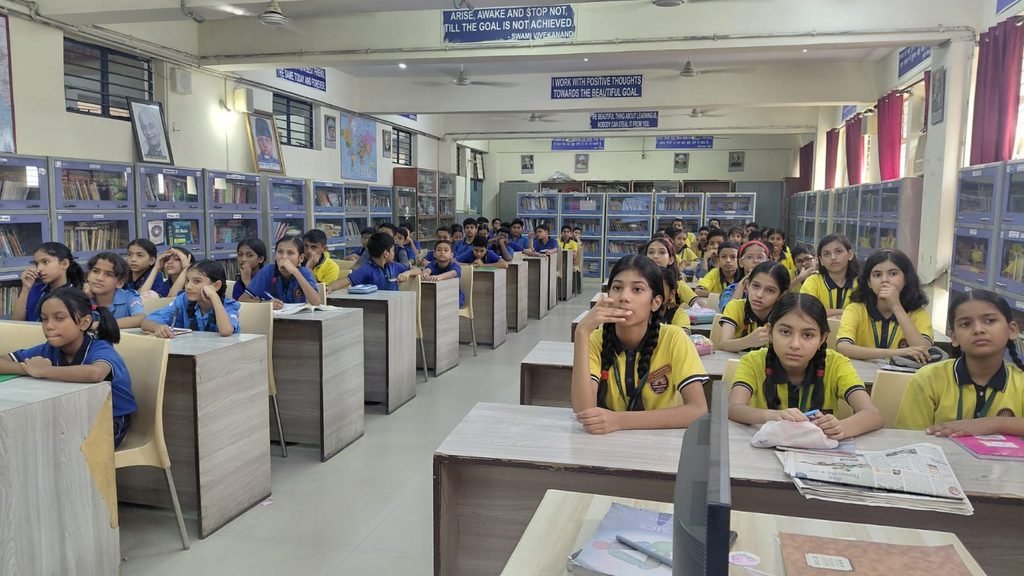
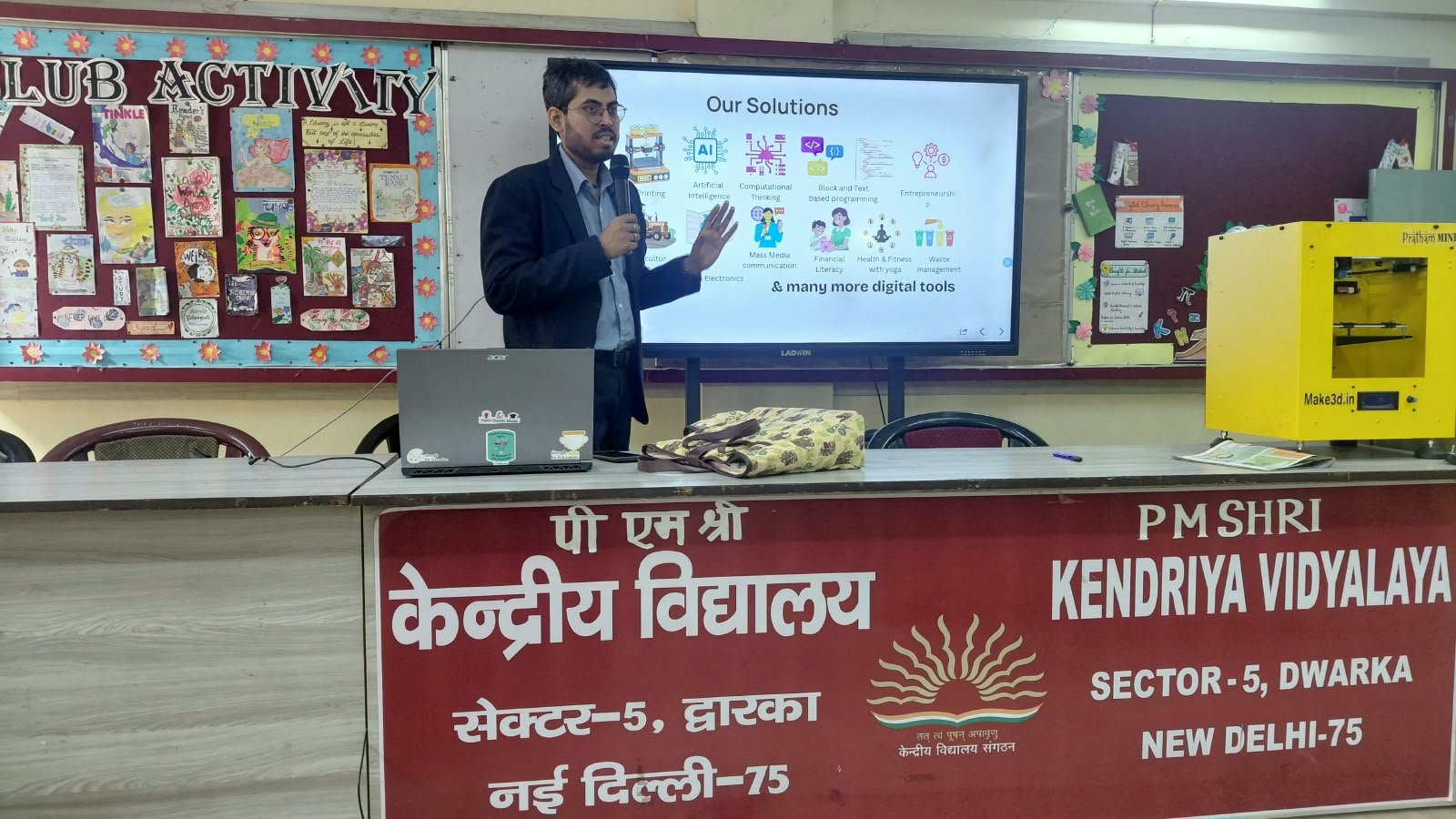
In an endeavour to promote experiential learning, scientific temper, creativity and technological awareness among young learners, PM SHRI Kendriya Vidyalaya, Sector–5, Dwarka, organised an engaging 3D Learning and 3D Printing Workshop for students of Class VI on 14 October 2026. The workshop was facilitated by WOW3D Learning under the guidance of Shri Lokesh Kumar, an alumnus of the Indian Institute of Technology (IIT), Madras..
The workshop introduced students to the exciting world of three-dimensional technology and demonstrated how imaginative ideas can be transformed into tangible objects through digital design and 3D printing.
Moving beyond conventional classroom instruction, the programme provided students with an opportunity to understand emerging technologies and appreciate their applications in real-life situations.
About WOW3D Learning: Empowering Education Through Industry 4.0 Skills
WOW3D Learning is a brand of Tapeshwar Innovative Learning and Training Services Private Limited, a Startup India-recognised company bearing DPIIT Certificate No. DIPP184362. The organisation was co-founded by Shri Lokesh Kumar, an alumnus of IIT Madras.
WOW3D Learning offers a hybrid learning model combining face-to-face classroom training with an online learning platform. Its programmes are designed to equip teachers and students with essential skills relevant to the rapidly evolving technological landscape of Industry 4.0.
Its learning initiatives cover a wide range of contemporary subjects, including:
- 3D Printing and Associated Software: Digital designing, three-dimensional modelling and additive manufacturing.
- Scratch Programming: Introducing computational thinking and logical reasoning through visual programming.
- Python Programming: Developing foundational coding and problem-solving skills.
- Prompt Engineering: Understanding effective interaction with Artificial Intelligence tools.
- Computational Thinking: Developing analytical abilities and structured approaches to problem-solving.
- Artificial Intelligence: Introducing students to emerging intelligent technologies.
- Arduino and Robotics: Exploring electronics, automation and hands-on technological applications.
- Kotlin Mobile App Development: Introducing mobile application development.
- ICT Skills: Strengthening digital literacy and technological competence.
- Financial Literacy and Entrepreneurship: Developing financial awareness, entrepreneurial thinking and practical life skills through SEER and ICT programmes.
These programmes are designed in alignment with the broader educational vision of the National Education Policy (NEP) 2020 and the National Curriculum Framework (NCF) 2023.
Understanding the World of 3D Learning and Printing
The workshop familiarised students with the concept of three-dimensional objects and helped them understand how 3D technology differs from conventional two-dimensional drawings and images. Students were introduced to the basic principles of 3D printing, an innovative manufacturing process through which physical objects are created by depositing material layer by layer based on a digital design. The session demonstrated the fascinating journey of transforming an idea into a digital model and subsequently converting it into a physical object.
Key Learning Dimensions of the Workshop
1. Introduction to Three-Dimensional Visualisation
Students explored the fundamentals of length, breadth and height and understood how digital designs can represent objects in three-dimensional space. This helped them appreciate the relationship between geometry, mathematics, design and technology.
2. Understanding 3D Printing Technology
The resource person explained the basic working principles of a 3D printer and introduced students to the process of additive manufacturing. Students gained an understanding of how digital models are translated into physical objects through successive layers.
3. From Digital Design to Physical Creation
The workshop highlighted the process of converting creative ideas into digital designs and then into physical prototypes. This demonstrated how technology can bridge the gap between imagination and practical application.
4. Creativity, Design and Innovation
Students were encouraged to think beyond conventional solutions, visualise new possibilities and appreciate how innovative ideas can be developed into useful products.
5. Applications of 3D Printing in Everyday Life
The workshop introduced the potential applications of 3D printing in several important sectors:
- Healthcare and medical modelling.
- Engineering and product prototyping.
- Architecture and construction.
- Education and scientific demonstrations.
- Space research and advanced manufacturing.
- Product designing and customised manufacturing.
Industry 4.0 Skills: Preparing Students for the Future
Industry 4.0 represents a new era of technological advancement characterised by automation, artificial intelligence, robotics, digital manufacturing and interconnected systems. Exposure to these emerging technologies at the school level can help students develop the confidence and curiosity required to participate in a technology-driven world. WOW3D Learning’s broader educational approach focuses on introducing these skills through structured learning, guided activities, software-based exercises and practical applications. The initiative emphasises that technological education should not remain limited to theoretical knowledge or one-time demonstrations. Rather, students and teachers should have opportunities for continuous learning, practice and application.
NEP 2020 & NCF 2023: Moving Towards Experiential Education
The workshop reflects the educational philosophy envisaged under the National Education Policy (NEP) 2020 and the National Curriculum Framework (NCF) 2023, which place considerable emphasis on competency-based education, experiential learning, critical thinking, creativity and problem-solving. The traditional approach of learning concepts primarily through textbooks is increasingly being complemented by practical activities that encourage students to explore, experiment and apply their knowledge.
The integration of 3D printing and associated technologies into school education offers several important benefits:
- Learning by Doing: Converting abstract concepts into visible and tangible learning experiences.
- STEAM Integration: Connecting Science, Technology, Engineering, Arts and Mathematics through interdisciplinary activities.
- Project-Based Learning: Encouraging students to develop ideas, design prototypes and explore practical solutions.
- Innovation and Creativity: Providing opportunities to experiment, modify designs and think independently.
- Critical Thinking: Developing the ability to analyse challenges and identify possible solutions.
- Digital Competence: Building familiarity with contemporary technological tools and platforms.
Empowering Teachers Through Continuous Professional Development
An important aspect of WOW3D Learning’s approach is its focus on continuous teacher development alongside student learning. The hybrid learning model combines classroom interaction with an online learning platform, enabling educators to understand foundational concepts, practise software workflows, participate in guided activities and subsequently apply their learning in school contexts. This approach can strengthen teachers’ instructional confidence and support the integration of technology into regular classroom teaching. Teachers can gradually move from explaining concepts theoretically to guiding students through the process of designing, creating, testing and improving practical models. Thus, Industry 4.0 education becomes an opportunity not merely for technology adoption but also for enriching teaching-learning practices.
Learning Outcomes: Developing 21st-Century Competencies
The initiative supports the development of essential competencies among young learners:
| Competency | Learning Value |
|---|---|
| Creativity | Encourages imagination and original thinking |
| Critical Thinking | Promotes logical analysis and decision-making |
| Problem-Solving | Develops practical approaches to challenges |
| Digital Literacy | Builds familiarity with emerging technologies |
| Spatial Intelligence | Improves three-dimensional visualisation |
| Innovation | Encourages experimentation and prototyping |
| Collaboration | Supports learning through interaction and shared ideas |
A Meaningful Step Towards Future-Ready Education
The 3D Learning and Printing Workshop was an enriching opportunity for Class VI students to gain an introductory understanding of emerging technologies and their relevance in everyday life. The initiative reinforced the importance of integrating technology, creativity and practical learning into school education. It also highlighted how exposure to Industry 4.0 skills can help nurture curiosity, innovation and a problem-solving mindset from an early age. Through initiatives of this nature, PM SHRI Kendriya Vidyalaya, Sector–5, Dwarka, continues to encourage learning experiences that extend beyond textbooks and prepare students to become confident, creative and responsible contributors to a rapidly changing world.